About Slime Tilt
Move Every Slime with One Tilt
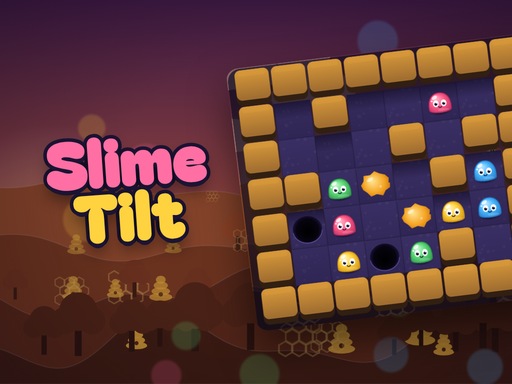
Slime Tilt is a compact logic puzzle where a directional input affects the entire board. All movable slimes slide together until the layout stops them. Matching colors merge when they meet, and the level is complete when only one slime of each color remains. A move that helps the pink slimes may separate the green ones, so solving the board requires thinking about several paths at once.
Three Worlds Introduce New Rules Gradually
Squish School teaches the behavior of pink, green, and blue slimes while adding holes that can remove a piece from the route. Honey Hollow introduces sticky honey, which stops a slime in place and makes yellow slimes part of the puzzle. Stone Quarry adds heavy stones. Stones never merge, but they can block motion or fill a hole to create a bridge.
The Par System
Each of the 38 handcrafted levels has a target number of tilts. Reaching the solution is enough to continue, while solving near the par earns up to three stars. This creates two valid ways to play: discover any working route first, then return to reduce unnecessary movement.
Controls
- Tilt: Arrow keys or WASD
- Undo: Z or Backspace
- Restart: R
- Pause: P or Escape
- Mobile: Swipe or tap the on-screen arrows
How to Analyze a Level
Identify fixed objects before moving. Holes, walls, honey, and stones determine where a slime can stop. Next, find a pair of the same color and imagine how both pieces respond to one tilt. A successful plan often uses a wall or stone to stop one slime while another continues moving. If the first tilt sends a required piece into a hole, the plan needs a different opening.
Undo Is Part of Solving
Using Undo is not a failure. It lets you test one consequence without resetting the entire puzzle. When stuck, undo until the board reaches the last position you understood, then change a single direction. A hint can help, but studying why the suggested move works is more useful than copying the rest blindly.
Two slimes, one tilt and a stopping point
Imagine the two pink slimes on parallel rows of a small practice layout. The upper slime has open cells leading right to the outer wall. The lower slime has a patch of honey before reaching the same column. Tilt right and both move. The upper one reaches the wall, while the lower one stops at the honey. At the end of the move they still occupy different columns, so tilting up at once may only send the lower slime into a different part of the layout. Make your next decision from their positions after both have stopped.
Now picture an obstacle to the right of the upper slime, stopping it in the honey column instead. If pressing right leaves the two slimes lined up vertically this time, tilt along that column once you see that the route between them is open. The first tilt used two objects to stop two pieces at the same offset, and the second tilt makes the merge. The arrangement shows why putting a stop in the upper route can actually save a move. If a hole were between the two slimes, the alignment would still be useful evidence, but you would have to fill that hole with a stone or find a different column before committing the second tilt.
Count tilts by what they accomplish
A Par route should give each movement a job. After using a tilt to create an alignment, see if the next tilt takes advantage of it immediately. On a second attempt, consider whether a move that just pushed everything against a wall can be removed without changing the alignment you need. Stones in Stone Quarry add a useful condition for this check: see where the stone will stop before predicting where a slime behind it will stop. A filled hole can give the board a different route on the next turn. Do not count it as a bridge before the stone has moved there.
Undo one trial at a time. If a right tilt created the alignment and an upward tilt spoiled it, go back only as far as the upward move. Compare the remaining directions against the positions you already solved. A level can be finished with extra moves first, then replayed toward Par once you know which collision or piece of honey each part of the solution depends on.
Game credit on GameMonetize · Dollop Games